Why \"Calm Down\" or \"Just Breathe\" Fails and the 7 Profiles of Performance Anxiety
The house lights dim. The muffled shuffle of the audience settles into that thick, anticipatory silence. You have done this a thousand times - the ritual of walking into the light, the first note, the first line. But tonight, the script is different.
Your mind is not on the subtext or the cadenza; it is broadcasting a relentless, silent commentary: “Your hands are trembling. They can see it. Your voice will crack. The critic in the third row is already writing the post-mortem.” Your heart is not just beating; it is a frantic piston in your chest, a somatic alarm screaming "danger". You feel detached, watching yourself from a distance, as if your body is on autopilot while the "real" you is locked away. The performance happens, but you were never truly present to witness it.
Afterwards, the only memory you retain is the searing heat of a single missed cue, replaying on a loop - the definitive proof of your fundamental inadequacy.
If this feels uniquely, painfully yours, you are not broken. You are experiencing a specific neurological and psychological pattern. Generic advice has likely failed you because it treats a complex, multi-system response as a single problem to be solved with a one-size-fits-all tool.


The Failure of Generic "Mindset" Advice
As an intelligent performer, you have likely been told to "just breathe", "visualise success", or simply "calm down". When these platitudes fall flat during a genuine nervous system hijack, the implication is often that you did not try hard enough, or that your anxiety is somehow more profound and shameful than that of your peers.
This is not only unhelpful; it is scientifically misguided.
Performance anxiety is not a monolithic entity. It is a constellation of symptoms arising from distinct, identifiable pathways in your brain and nervous system. Telling a performer whose primary experience is overwhelming physical panic (the Somatic Sensor) to "just visualise" is like telling someone with a dislocated joint to walk it off. It misidentifies the physiological mechanism.
For the performer plagued by prophetic, catastrophic thoughts (the Catastrophiser), positive affirmations are often cognitively swallowed whole by a much louder, more practised fear network. The advice fails because it is not matched to the diagnostic reality.
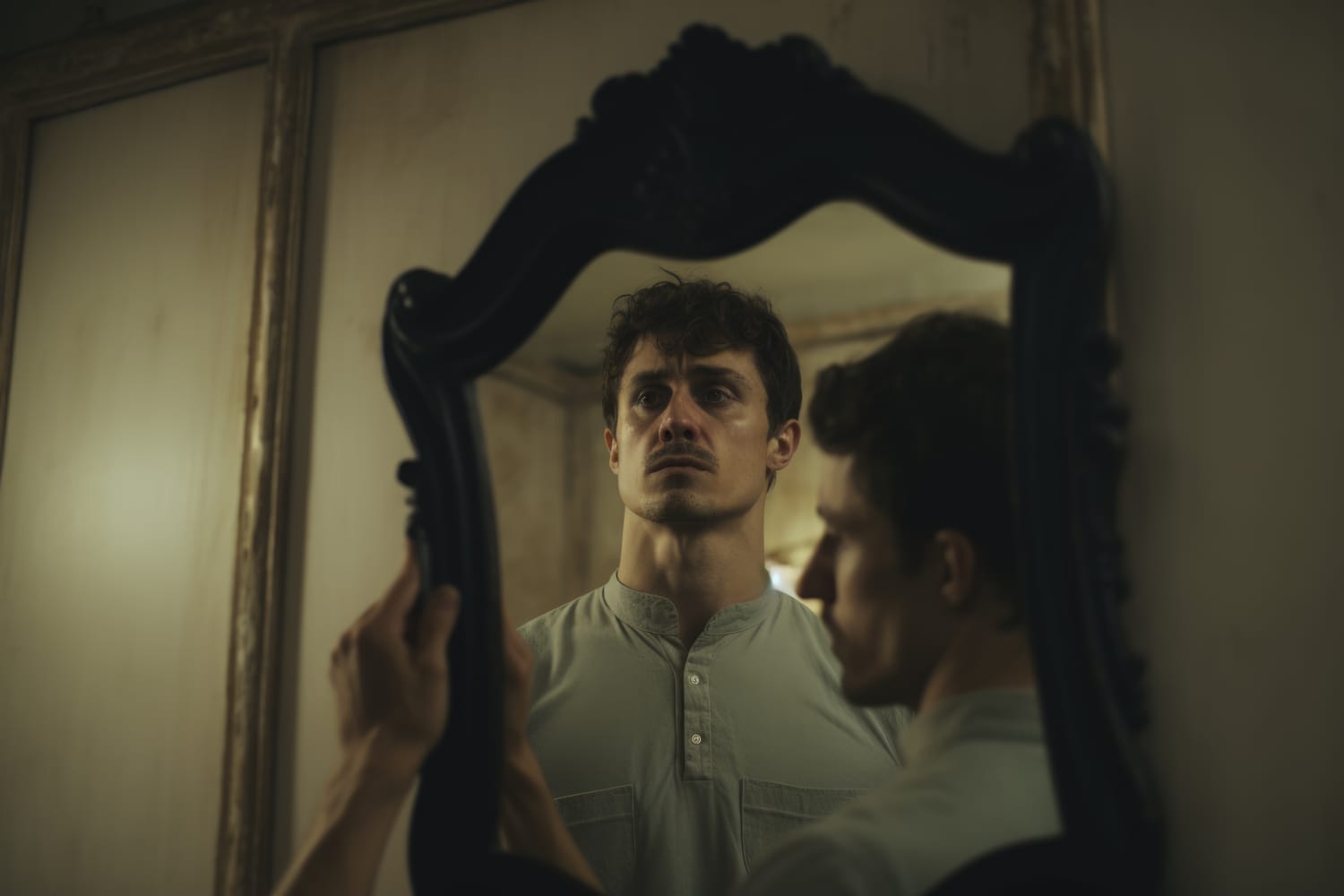
A Clinical Reframe: Symptom Profiles over Pathologising
In clinical psychology, we move away from judgement and into diagnostic clarity. We do not need to "fix" you, because you are not broken; we need to map your response. Your experience of stage fright is a meaningful signal - a data point indicating how your unique system reacts under perceived threat.
Based on evidence-based frameworks - including Cognitive Behavioural Therapy (CBT), Acceptance and Commitment Therapy (ACT), and psychological theory - we can identify seven common Symptom Profiles. Each represents a dominant pattern of thought, physiological response, and behaviour.
Understanding your profile is about gaining a precise blueprint. When you name the mechanism, you stop fighting a ghost and start addressing a defined process.
The 7 Common Types of Performance Anxiety

1. The Catastrophiser
Your anxiety lives in a runaway cognitive loop. Your mind, in a well-intentioned but misguided attempt to protect you, excels at forecasting disaster. The "what if" narrative is constant, pre-loading your nervous system with stress long before the curtain rises.
2. The Somatic Sensor
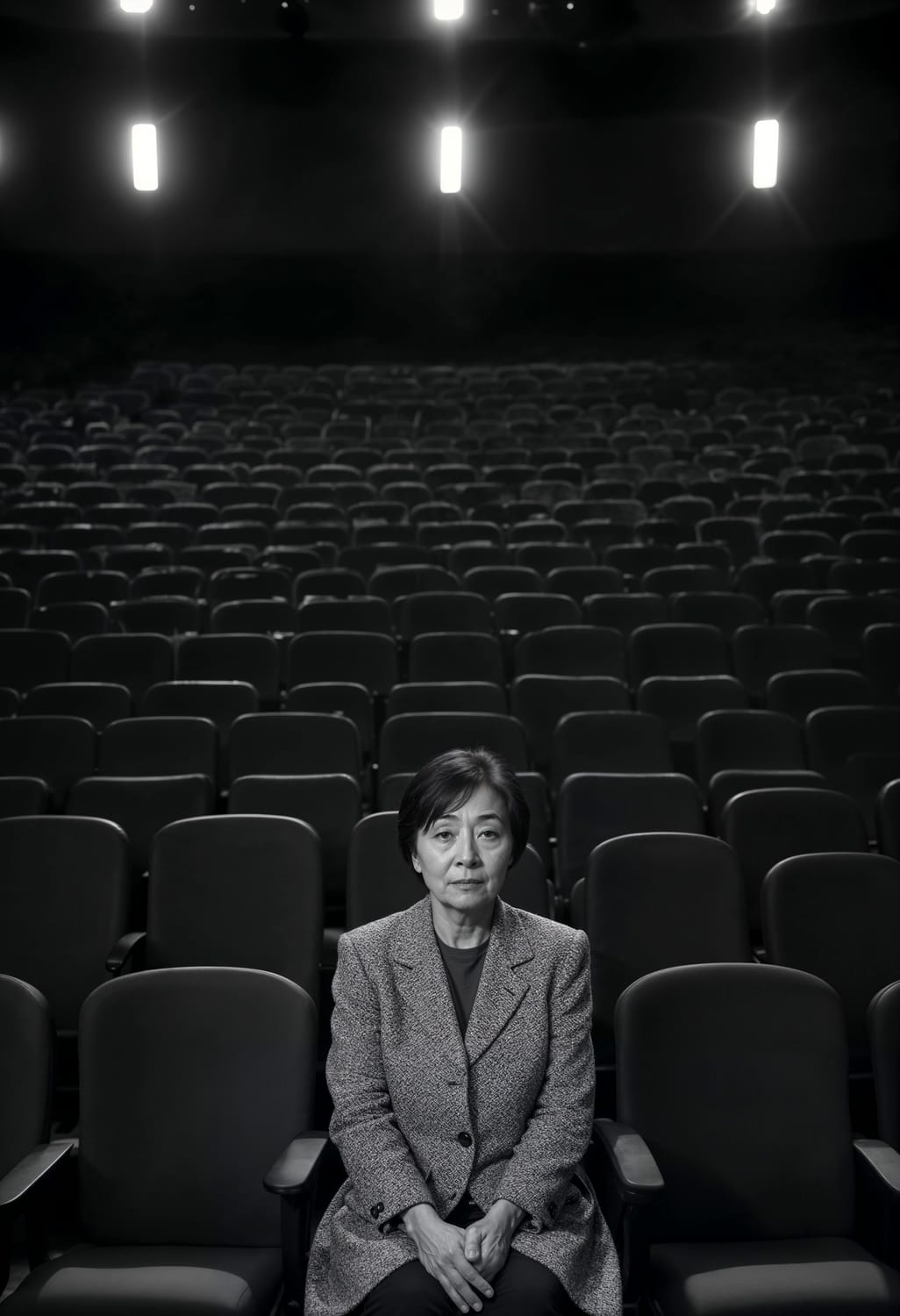
Anxiety speaks first and loudest through your body. Pounding heart, trembling hands, or "cotton mouth" are not just symptoms; they become the main event, triggering a secondary fear of the sensations themselves. You have a hair-trigger threat response that requires direct nervous system regulation rather than generic relaxation.

3. The Imposter Perfectionist
This struggle is rooted in conditional self-worth. You operate under the belief that you must be flawless to be valid. This drives punishing practice habits and a feeling that you are never "ready". The issue is not a lack of skill, but a fragile connection to your intrinsic worth.
4. The Comparison Constable
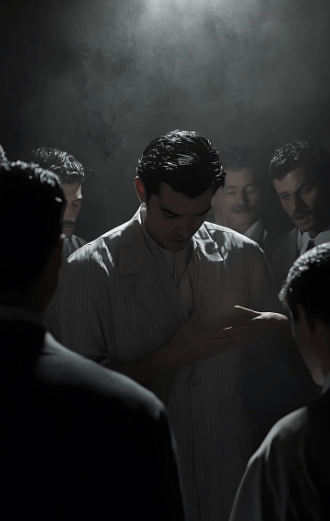
Your mental energy is siphoned by the constant, exhausting habit of social comparison. You measure your internal progress against the curated highlight reels of others. This fuels inadequacy and a deep uncertainty about your own artistic place.

5. The Avoider
Anxiety manifests as a powerful, almost magnetic urge to escape. The brain offers avoidance: cancelling, postponing, or procrastinating on rehearsal as the only logical solution to a perceived life-threat. This is a survival response, not a lack of commitment.

6. The Dissociator
Under pressure, your mind pulls the emergency brake. You may feel numb, detached, or "blank" on stage. This is a psychological defence against overwhelm, a state of being "dislocated" from the present. You do not need to "focus harder"; you need grounding strategies to make the environment feel safe enough to remain present.

7. The Inner Tormentor
Your primary obstacle is a persistently harsh, critical inner voice. This is not constructive feedback; it is a pattern of self-punishment that erodes joy. It likely developed as a motivator, but it has become a source of immense pressure and shame.

From Insight to Strategy
Most performers are a nuanced blend of two or three primary profiles. This complexity is exactly why generic coaching fails. The Somatic Sensor who is also an Inner Tormentor requires a vastly different clinical approach than a Catastrophiser who struggles with Dissociation.
Insight is the first step, but insight without a specific map is just more data to worry about. To move from confusion to clinical clarity, you must identify your specific drivers.
Your Next Step: The Stage Fright Symptom Profiler
I have developed the Stage Fright Symptom Profiler as a clinical assessment tool for professional artists. This is not a casual internet quiz; it is an evidence-based questionnaire designed to help you pinpoint your dominant profiles.
By defining your specific combination, you stop guessing at solutions and start being strategic.
When you download the Profiler, you will receive:
The Full 28-Point Assessment: Pinpoint which of the 7 profiles (or combination thereof) governs your performance experience.
The FBI Reset Toolkit: A practical audio and guide (Feet -Breath-Intention) designed specifically for backstage use to ground your nervous system in real-time.
Targeted Video Support: Access to my 2026 YouTube series, "Beat Performance Anxiety," featuring a dedicated video for each profile with a practical tool designed for that specific psychological mechanism. Just go to my YouTube channel and Find a Playlist titled Beat performance Anxiety in 2026 or follow this link
Stop applying generic fixes to a specific nervous system response. Gain the clarity you need to perform with command, consistency, and artistic freedom.

HI, I’M DR. MAJA JANKOWSKA...
a Clinical and Counselling Psychologist specialising in the mental wellbeing of stage performers. I support musicians, singers, actors and other high-achieving creatives in developing psychology-informed mental skills so they can perform with confidence, manage pressure and maintain resilience without burnout.
With 23 years of clinical, academic and research experience – including expertise in CBT, EMDR, trauma (PTSD & C-PTSD) and performance psychology – my approach is grounded in robust scientific evidence.
My aim is to safeguard your passion, longevity and emotional wellbeing in one of the most demanding creative industries.
If you’re seeking free resources, expert guidance on performance anxiety and self-doubt, or support in achieving peak performance whilst staying mentally strong, you’re in the right place.



JOIN MY MAILING LIST